
Empowering Gifted and 2E Learners:
Strength-Based Strategies for Advocacy and Support
Presentation - NAGC Annual Convention Nov. 13-16, 2025
David L. Lawrence Convention Center
Pittsburgh, PA

All presenters are current students or alumni of Bridges Graduate School
The research presented in this poster session stemmed from a panel discussion that sought insight from Gifted & Twice-Exceptional leaders serving learners in five distinct learning communities: Traditional Public-US, Special Private - Canada, Post-Secondary, Non-Traditional - US, and Family Advocacy/Homeschooling
Click on the title section in the image below that you would like to explore. This will take you to the correct section of the webpage. Each researcher has shared additional resources, etc., that may be of benefit.
Be sure to click on images as most are active links as well!
.png)
Niche Construction and Flexible Systems Scaffold Success in
Non-Traditional Micro-Schools &
Programs
Maggie Eubanks - Non-Traditional - US
MEd, MLS, BCSE
Owner & Head - Palmetto Bay Academy Schools
Doctoral Student Bridges Graduate School for Cognitive Diversity in Education
.jpg)
Audio
Niche Construction is a Small School Specialty
For decades in the US small, non-traditional schools served small portions of the population seeking alternatives to large, traditional, and often rigid public school systems. Yet even these existing small schools didn’t often match the needs of Gifted & 2E learners. But in recent years, non-traditional schools designed for 2E learners have been able to become the unique Niche environments that 2E learners thrive in. Small school programs can offer both worlds; the flexibility and nimbleness needed to meet 2E learners where they’re at, and also experiences common in more traditional schools, such as group classes, ready-made pathways to colleges and universities, opportunities for structured schedules, clubs, and leadership positions, while still being supportive, caring environments.
Partnerships - Parents, Programs & Providers
Non-traditional schools are typically able to offer much more direct and meaningful partnerships with parents than traditional schools can offer. Additionally, non-traditional schools can often be tapped to directly partner with Gifted/2E learners' existing programs & providers. For 2E learners in particular, partnering with support personnel allows non-traditional schools to integrate executive functioning practices, etc., that students' specialists are already working on.


Helpful Resources For Parents


They're Gifted, Not Perfect
Part memoir, part support resource, my first book
will be hitting the shelves in 2026!
Helpful Resources For Educators


Authentic Opportunities and a School Transcript
Non-traditional independent schools are able to engage in personalized enrichment, adaptive and advanced academic pathways, yet also offer the structure of an established school. They can leverage existing dual-enrollment agreements and other programs often restricted to schools, yet still have the feeling and responsiveness of homeschool. And by choosing accredited small schools, families can also breathe easier as official transcripts take the stress out of proving credits, etc. in a student's college application process.
2e & Gifted Teachers are Priceless
The body of research is growing, acknowledging that 2E and Gifted learners see their best outcomes when being taught by 2E & Gifted educators. Some small school programs like Palmetto Bay Academy Schools and others specifically choose Gifted & 2E educators, knowing that they can create the best “village” for these amazing learners to thrive!
Key Takeaway
Niche construction is key to success for 2E learners. Small non-traditional schools often have these niche environments ready-made to allow for the best experiences of personalized education while still having a school community of other neurodiverse learners.
Josephson, J., Wolfgang, C., & Mehrenberg, R. (2018). Strategies for supporting students who are twice-exceptional. Journal of Special Education Apprenticeship, 7(2). https://eric.ed.gov/?id=EJ1185416
Reis, S. M., Baum, S. M., & Burke, E. (2014). An operational definition of twice-exceptional learners: Implications and applications. Gifted Child Quarterly, 58(3), 217–230. https://doi.org/10.1177/0016986214534976
Reis, S. M., & Renzulli, S. J. (2025). Research-based strength-based teaching and support strategies for twice-exceptional high school students with autism spectrum disorder. Behavioral Sciences, 15(6), 834. https://doi.org/10.3390/bs15060834
Steiner, A. (2024). Embracing the Intersection of Giftedness and Disability: Examining a Standalone School Model for Twice-Exceptional Learners [University of Southern California]. https://www.proquest.com/openview/bc85361cb286c51d365827a9cf446df7/1?pq-origsite=gscholar&cbl=18750&diss=y
Willard-Holt, C., Weber, J., Morrison, K. L., & Horgan, J. (2013). Twice-exceptional learners’ perspectives on effective learning strategies. Gifted Child Quarterly, 57(4), 247–262. https://doi.org/10.1177/0016986213501076
Additional Resources
Upcoming article in Parenting for High Potential
"Co-Occurring ASD with ADHD and Advocacy Advice for Parents: Asking the Right Questions for the Best Results" by Maggie Eubanks, 2026
Eubanks, M. (2025, April 23). ADHD 2.0 - A book review. 2E News. Bridges 2e Media. https://www.2enews.com/book-reviews/adhd-2-0/
Wide Ranges
Among the Gifted Neurotype Call for Flexible Pathways and Educational Options
Lisa Jobe - Family Advocacy / Homeschool Founder - Sequoia Gifted & Creative JD, Doctoral Candidate - Bridges Graduate School for Cognitive Diversity in Education

Gifted Programs Need Flexible Pathways.
Giftedness spans a wide range. Students in the 95th and 99.9th percentiles may differ as much from each other as from the norm. Highly-profoundly gifted learners often show intense asynchrony, with advanced intellect but uneven emotional or executive growth. Typical gifted policies rarely provide the radical pacing or intellectual peers HG/PG learners need. For 2e learners, high ability can mask disabilities—or the reverse—leading to unmet needs on both sides. Effective gifted education requires individualized pathways that honor what each learner needs to fulfill their academic potential while also meeting their social and emotional needs.
Learning Together: Partnering for Gifted/2e Success.
Because research and best practices for gifted/2e education are continually evolving, no one person has all the answers. Many teachers receive limited preparation on highly gifted or 2e needs, while parents and advocates often discover resources and strategies through lived experiences. Collaboration built on curiosity and mutual respect creates partnerships that place the child’s growth and well-being at the center.
Gifted Learners Often Don’t Fit Age-Grade Stereotypes.
Gifted/2e learners rarely fit neatly into age-based expectations. Many think, question, or feel far beyond age-peers, while others show advanced reasoning but age-typical or uneven emotional growth. Some are socially and emotionally advanced, relating more easily to older students. This asynchronicity means a single age-grade placement often fails to meet their academic or social needs. Age stereotypes can limit challenge or connection.
Traditional Education Doesn’t Always Fit.
Gifted/2e learners often need more flexibility and depth than traditional classroomscan offer. Their asynchronous growth and unique strengths thrive in settings that adapt to them, rather than their having to adapt to the setting. Through homeschooling, families can create a positive niche environment that blends the best of all worlds—tutors, online learning, dual enrollment, and co-ops—so each learner’s path is as individualized as their potential.
Key Takeaway
Equitable identification and meaningful support require a community effort. By combining clear
state guidelines, informed educators, and strong family partnerships, we can ensure all gifted
and twice-exceptional students are seen, supported, and able to thrive.
Helpful Resources


Baum, S. M., Renzulli, S., & Jobe, L. (in press). The twice-exceptional adolescents: Who are they? What do they need? In The handbook of secondary gifted education. Routledge.
Sign Up for Pre-Order by clicking on image.
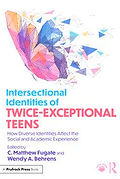
Baum, Susan and Jobe, Lisa (in press). [Forward] In Fugate, C. Matthew, Behrens, Wendy A., Boswell, Cecilia (Ed.), Intersectional identities of twice-exceptional teens: How diverse identities affect the social and academic experience. Routledge.
Pre-Order by clicking on image.
Connolly-Sporing, A., Cody, R. A., & Plucker, J. A. (2024). Gifted students learning in homeschool settings: Research and policy recommendations. Journal of School Choice, 18(4), 638–652. https://doi.org/10.1080/15582159.2024.24222
Jobe, L. (2024, November 22). Why gifted and twice-exceptional learners frequently change schools [Conference presentation]. National Association for Gifted Children Annual Convention, Seattle, WA.
Jolly, J. L., & Matthews, M. S. (2018). The chronicles of homeschooling gifted learners. Journal of School Choice, 12(1), 123–145. https://doi.org/10.1080/15582159.2017.1354644 Taylor & Francis Online
Winstanley, C. (2009). Too cool for school? Gifted children and homeschooling. Theory and Research in Education, 7(3), 347–362. https://doi.org/10.1177/1477878509343736 Roehampton University

Audio
Additional Resources
Jobe, Lisa. (2025, May 14). Tips for parents: Bridging to homeschooling: A personalized pathway to learning success. Davidson Institute. https://www.davidsongifted.org/gifted-blog/tips-for-parents-bridging-to-homeschooling-a-personalized-pathway-to-learning-success
Jobe, Lisa. (2024, April 26). Creating a joyful homeschool learning environment for our gifted/twice-exceptional learners. Sequoia Gifted and creative. https://sequoiagifted.com/joyful-learning-environment
Jobe, Lisa. (2024, February 20). Searching for the proverbial unicorn: The ideal learning environment for our exceptional learners. part 2: making the leap with school change. GHF Journey. https://myemail.constantcontact.com/The-GHF-Journey----Finding-the-Ideal-Learning-Environment--Part-2---Vol-VI-No-2.html?soid=1133458394002&aid=DbygMw1kf9A
Jobe, Lisa. (2024, January 16). Searching for the proverbial unicorn: The ideal learning environment for our exceptional learners. part 1: advocating within the current learning environment. GHF Journey. https://myemail.constantcontact.com/The-GHF-Journey----Finding-the-Ideal-Learning-Environment--Part-1---Vol-VI-No-1.html?soid=1133458394002&aid=IGCautSizCM
Equity & Identification
for Gifted & Twice-Exceptional Learners in Colorado Public Schools
Meredith Thornhill - Traditional Public - US
Elementary Gifted and Talented Teacher
Mesa County School District #51
Grad. Certificate Birdges Graduate School


Helpful Resources


Identification Process
Colorado Department of Education (CDE) provides clear state guidelines for gifted identification. Identification ensures students receive instruction aligned with their strengths and learning profiles.
For twice-exceptional (2e) identification, students must have:
An Advanced Learning Plan (ALP) and Either a 504 Plan or an Individualized Education Program (IEP). This dual designation supports both exceptionalities—nurturing strengths through the ALP while addressing challenges through accommodations or specialized instruction.
Educator Awareness and Professional Development
Continued training and discussion on terminology (gifted, 2e, neurodivergent) build understanding and reduce stigma. Frequent team meetings focus on student progress, classroom supports, and equitable practices.
“Knowledge is power”—the more teachers understand, the more effectively they can serve diverse learners.
Collaboration and Family Engagement
ALP goals are developed collaboratively with students and families.
Parents contribute critical insights from the home perspective to build a complete understanding of the child. Open and ongoing communication between educators and families ensures consistent advocacy and support.
Classroom Strategies for Support
Simple adjustments can greatly improve outcomes for 2e learners: Flexible seating or movement options, Fidgets used as tools, not distractions, and nonverbal cues for sensory or emotional breaks.
These practices benefit all students, not just those identified as gifted or twice-exceptional.
Key Takeaway
Equitable identification and meaningful support require a community effort.
By combining clear state guidelines, informed educators, and strong family partnerships, we can ensure all gifted and twice-exceptional students are seen, supported, and able to thrive.
Gilman, B. J., Lovecky, D. V., Kearney, K., Peters, D. B., Wasserman, J. D., Silverman, L. K., Postma, M. G., Robinson, N. M., Amend, E. R., Ryder-Schoeck, M., Curry, P. H., Lyon, S. K., Rogers, K. B., Collins, L. E., Charlebois, G. M., Harsin, C. M., & Rimm, S. B. (2013). Critical issues in the identification of gifted students with co-existing disabilities: The twice-exceptional. Gifted Child Quarterly, 57(4), 247–250. [PDF] Critical Issues in the Identification of Gifted Students With Co …
Jennings, J. M. (2025). Excellence Gaps: A State-Based Review of Policies (Doctoral dissertation, University of Denver). ProQuest Dissertations & Theses No. 32046122. Abstract
https://acrobat.adobe.com/id/urn:aaid:sc:US:54568d8a-66ad-430a-8203-3d30b60c1117


Audio
Strengths Over Struggles
Guides Success for 2E Learners in
Post-Secondary Settings
Holly Kincaid - Post-Secondary
EDD - Bridges Graduate School
Assistant Professor of Education at
Truman State University (TSU)
.jpg)

Helpful Resources

Strengths Over Struggles (SOS)
When working with twice-exceptional students in postsecondary settings, it is essential to focus on leveraging their strengths rather than their weaknesses across all academic areas. This strength-based approach enhances their’ self-efficacy, motivation, and persistence.
Promoting Self-Advocacy and Independence
Postsecondary education requires students to assume responsibility for their own learning, including managing time, requesting accommodations, and communicating with faculty. Without intentional guidance, many students, particularly those with exceptional learning profiles,may find it difficult to express their needs or advocate for appropriate supports. Structured mentorship and explicit instruction in self-advocacy skills enable these learners to approach challenges with greater confidence, persistence, and autonomy.
Equitable Access
Postsecondary institutions can unintentionally overlook twice-exceptional students because they often appear to be high achievers. However, it is important to recognize that these students may also experience challenges such as difficulties with executive functioning, processing speed, or anxiety. Therefore, it is essential that colleges and universities provide structured academic advising, counseling, and disability services to ensure equitable access and support for all learners.
Neurodiverse Student Learning Communities
Faculty and advisors must communicate the importance of campus involvement and create opportunities for twice-exceptional students to collaborate with like-minded peers because these experiences directly enhance learning and personal growth. Engaging in peer communities allows 2e students to share strategies, validate one another’s experiences, and develop a sense of belonging — all of which contribute to deeper engagement and persistence in their studies.
Key Takeaway
Leveraging strengths ensures that their giftedness is nurtured alongside their support needs.
Foley-Nicpon, M., Assouline, S. G., & Colangelo, N. (2013). Twice-exceptional learners: Who needs to know what? Gifted Child Quarterly, 57(3), 169–180. https://doi.org/10.1177/0016986213490021
Baum, S. M., Schader, R. M., & Hébert, T. P. (2014). Through a different lens: Reflecting on a strength-based, talent-focused approach for twice-exceptional learners. Gifted Child Quarterly, 58(4), 311–327. https://doi.org/10.1177/0016986214547632
Reis, S. M., Baum, S., & Burke, E. (2014). An operational definition of twice-exceptional learners. Gifted Child Quarterly, 58(3), 217–230. https://doi.org/10.1177/0016986214534976
Support and Identification in Nationally
Supported Special Private Schools
in Canada
Michelle Smith - DSEP - Canada
MEd
Principal - Alberta Conference of Seventh-day Adventists
Doctoral Candidate Bridges Graduate School for Cognitive Diversity in Education
.jpeg)

Helpful Resources
Provides practical strategies for identifying and developing students’ strengths and talents. It offers guidance on implementing enrichment clusters, curriculum differentiation, and schoolwide programs that foster creativity, higher-order thinking, and engagement for all learners.
The book explores the unique needs, strengths, and challenges of twice-exceptional (2e) students while providing strategies for identifying, supporting, and nurturing them.

Identification Process
Students are identified based on diagnosed disabilities using assessments, teacher observations, screenings, and parent input. Proper coding and documentation, including IPPs or ISPs, are required for funding. Some schools also consider high cognitive ability or strong academic performance.E2 Academy requires a diagnosis of a severe disability, as well as exceptional cognitive ability or talent.
Collaboration and Family Engagement
Collaboration in DSEPS involves regular communication with families, joint decision-making in IPP meetings, and incorporating parent insights about their child’s strengths and needs. Schools also work closely with specialists to ensure coordinated services between home and school.
Educator Awareness and Professional Development
Educators in Alberta receive professional development to support students with disabilities, aligned with the Teaching Quality Standard (TQS). Training ensures teachers understand diverse learner needs and implement inclusive practices. Access to specialized resources helps educators provide effective individualized support.
Classroom Strategies for Support
Classroom strategies focus on strengths-based, individualized learning plans. Enrichment experiences and social-emotional programs help students manage emotions and build resilience. These approaches create adaptive classrooms that support academic and personal development.
Designated Special Ed. Private Schools - DSEPs
DSEPS are important because they provide individualized programs and supports for students with disabilities, including twice-exceptional learners, and receive government approval and funding to ensure these specialized services are accessible and high-quality.
Key Takeaway
DSEPS are important because they provide individualized programs and supports for students with disabilities, including twice-exceptional learners, and receive government approval and funding to ensure these specialized services are accessible and high-quality.
Alberta Regulation 127/2022. (2022). Independent Schools Regulation. Government of Alberta. Retrieved from https://www.canlii.org/en/ab/laws/regu/alta-reg-127-2022/latest/alta-reg-127-2022.html
Alberta Education. (2025). Special education coding criteria, 2025/26: Early childhood services to Grade 12; mild/moderate, gifted and talented, and severe. Government of Alberta. https://open.alberta.ca/publications/2368-3627
Renzulli, J. S., & Reis, S. M. (2014). The Schoolwide Enrichment Model: A how-to guide for talent development (3rd ed.). Routledge. https://doi.org/10.4324/9781003238904
Audio